We help homeowners in Asheville, West Asheville, Weaverville, Arden, Fletcher, Candler, Black Mountain, and nearby Buncombe and Henderson County areas with radon mitigation systems, crawlspace radon mitigation, testing and retesting, and radon fan repair. Most people call after a home inspection or test kit comes back at or above 4.0 pCi/L — the EPA action level — or in the 2.0–3.9 range when a buyer or family wants the number lower.
You only need the number from your report to call. No diagnosis, no prep — we’ll walk through the rest on the phone.
Thirty seconds. We call back by phone — usually with a clear scope from that one call.
You don’t need to understand the report. The number is enough — for example, “inspection said 6.8” tells us almost everything we need to start.
Every radon report comes down to one figure, measured in picocuries per liter of air. Here’s how to read yours — and what most Asheville homeowners do at each level. For the longer version, including why two tests of the same house can disagree, see Understanding Your Radon Test Result.
No mitigation needed at this level. Retest every couple of years, after major renovations, or after finishing a basement, since levels shift as a house changes.
The EPA suggests considering a fix in this range, and buyers in real-estate deals often request one. Mitigation typically brings these homes well under 2.0.
Mitigation is recommended at this level. A standard system usually resolves it — most installs are a single day of work. Call to talk through your number →
Whether you have an elevated test result, a crawlspace that needs a mitigation approach, a real-estate retest, or an older fan that may have stopped working, you can call without diagnosing the system first. These service pages explain the work, when it is needed, and what affects scope.
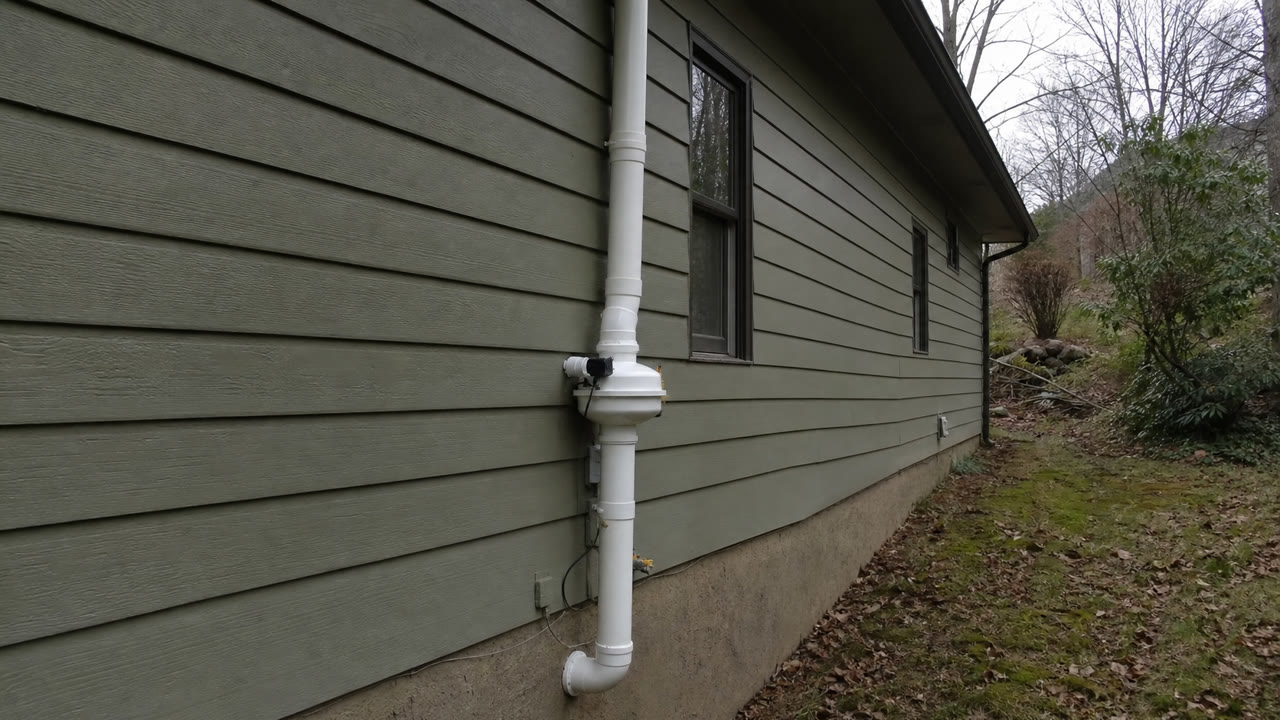
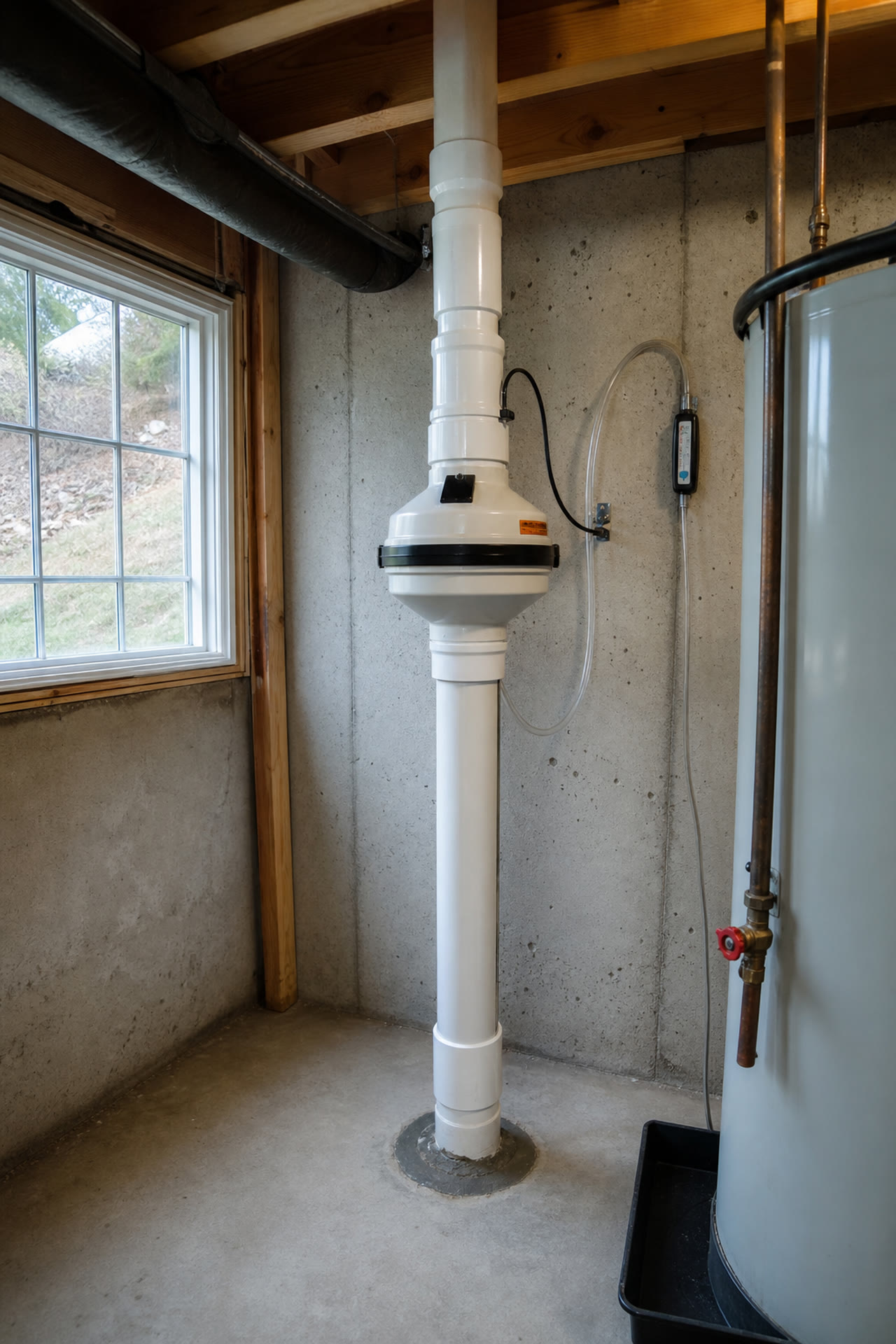
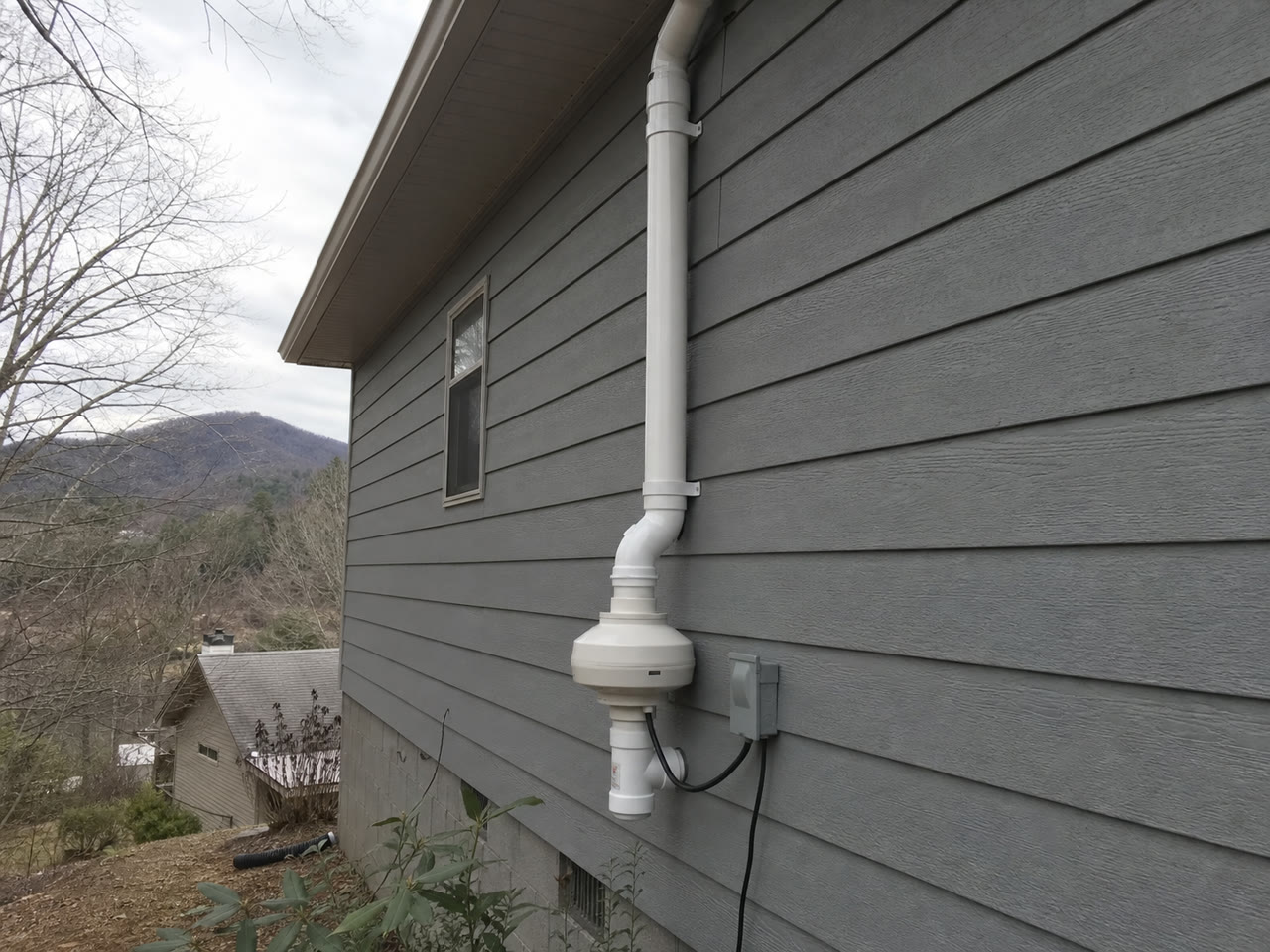
An active sub-slab depressurization system — suction point, sealed piping, and a quiet inline fan venting soil gas above the roofline.
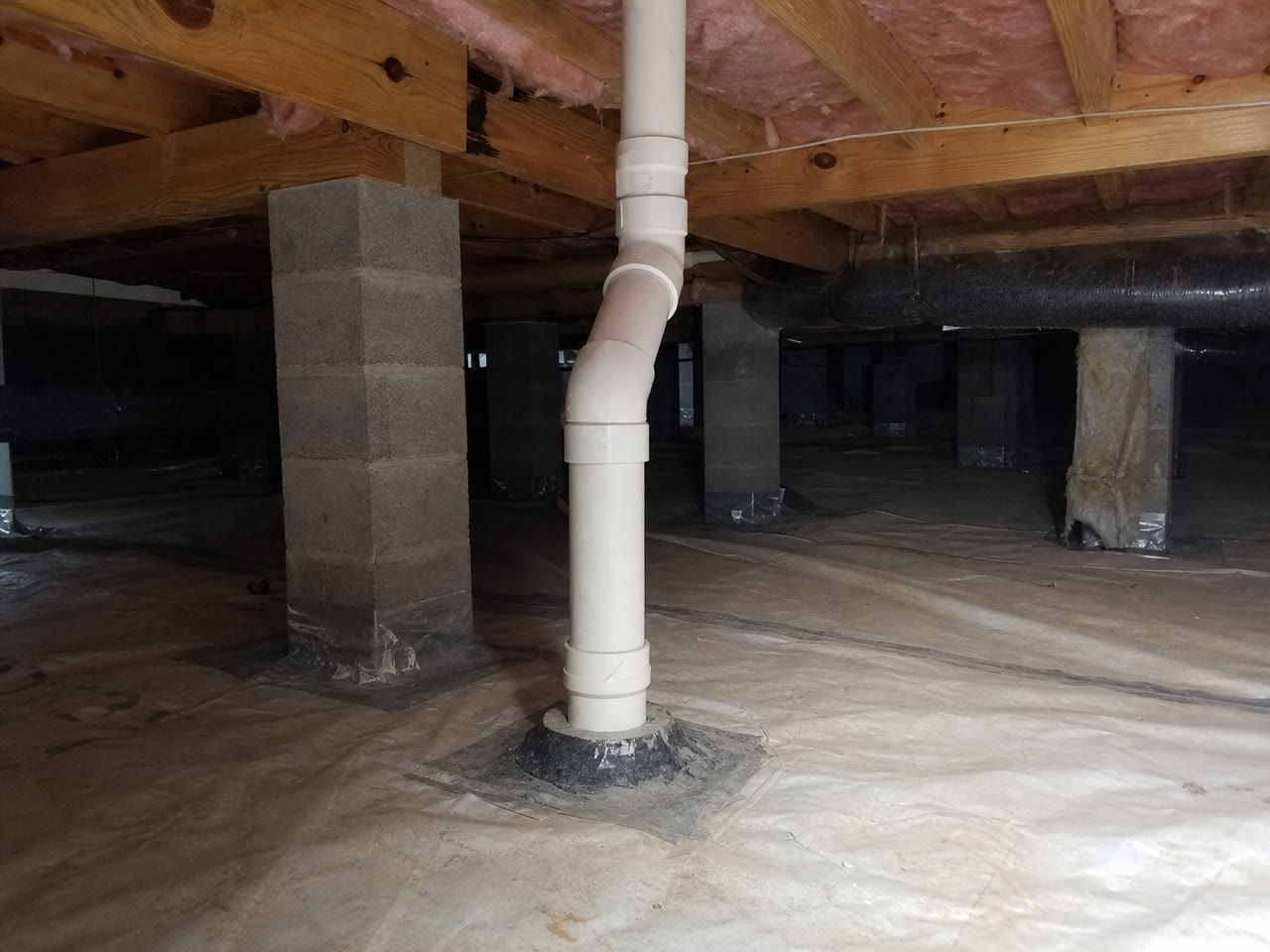
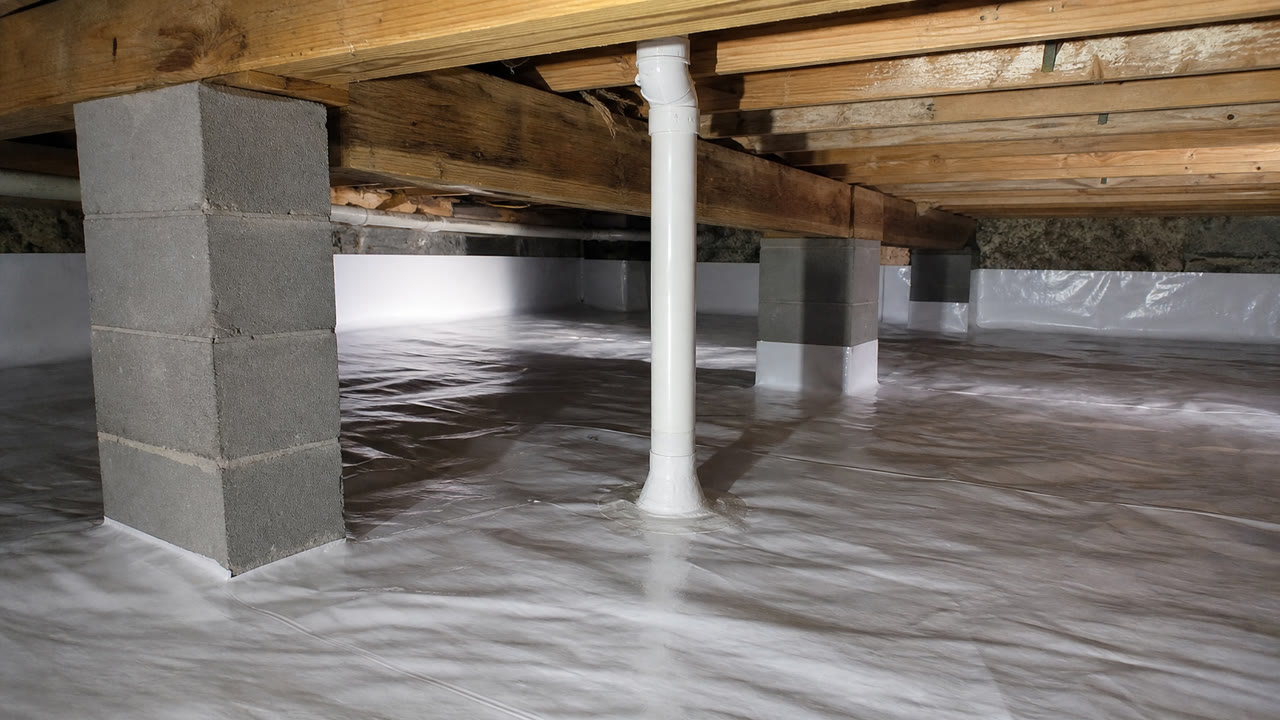
Sub-membrane depressurization for the vented crawlspaces under so many WNC homes — a sealed liner over the soil with suction beneath it.
Pre-purchase tests during due diligence, follow-up tests after mitigation, and periodic retests when a home or its use has changed.
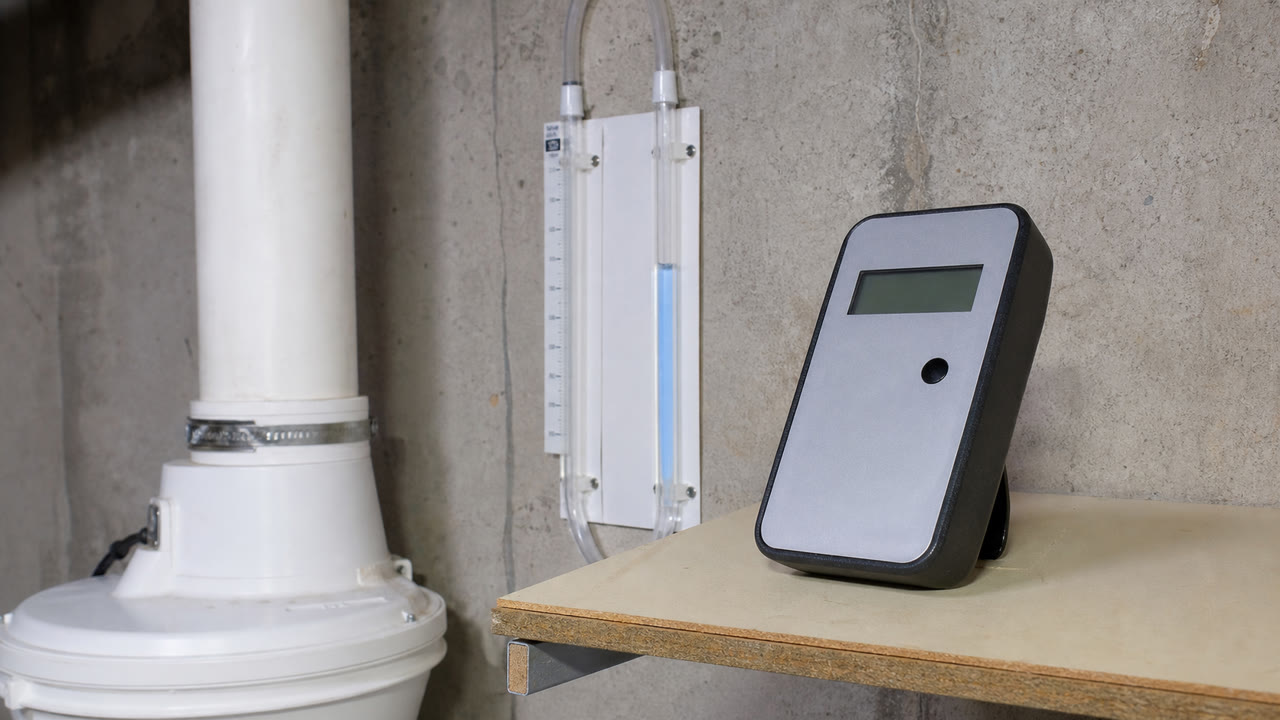
Fans wear out after years of constant running. If the manometer on your pipe reads level — or the hum has stopped — the system isn’t working.
Buncombe County sits in EPA Radon Zone 1 — the highest-potential category — and the reasons are built into the mountains and the houses themselves.
None of this means every Asheville home has a radon problem. It means the only way to know is a test — and that an elevated result here is normal, fixable, and not a reflection on the house.
No homework on your end. The whole point of the first call is that we do the sorting-out for you.
From your inspection report or test kit. “Not tested yet” works too.
Foundation type, rough square footage, whether there’s a sump or crawlspace. Plain language is fine.
Most homes can be scoped from that conversation. Some layouts need a quick look first — we’ll say so if yours does.
The system goes in, and a follow-up test confirms the new level so you’re not taking it on faith.
Radon mitigation isn’t one fixed price, because Asheville homes aren’t one fixed shape. The main drivers are foundation type — and combinations, since basement-plus-crawlspace layouts are common on hillside lots — slab condition, how many suction points the soil requires, pipe routing on a sloped exterior, fan size, and the membrane area in a crawlspace.
None of that is homework for you. It’s what we sort out in the first call, usually in a few minutes. The cost page explains each factor so the conversation makes sense when you have it.
Based around Asheville, covering Buncombe County and nearby communities. Details on each area are on the service areas page.
4.2 pCi/L is just over the EPA action level, so yes — mitigation is the recommended fix, and a standard system typically brings a home like that well under 2.0. It’s also worth knowing that radon fluctuates day to day, so a 4.2 isn’t a borderline pass; it’s a snapshot of a level worth addressing. Call with the number and we’ll talk through what a system would involve for your foundation type.
Yes. If you suspect radon — a neighbor’s result, a past test, or you’re buying in a Zone 1 county — call anyway. We can talk through testing first, what it involves, and what mitigation would look like if the result comes back elevated, so there are no surprises in either step.
It does, and it matters here because so many Western North Carolina homes sit on vented crawlspaces. The method is different from a basement system: a heavy sealed membrane goes over the crawlspace soil, and the system draws soil gas from beneath the liner before it can enter the house. Homes with both a basement and a crawlspace usually get a combined approach. The crawlspace mitigation page covers it in full.
A properly sized radon fan runs at roughly the volume of a quiet bathroom fan, and it’s mounted outside or in unconditioned space — most owners stop noticing it within a week. The piping is planned to be as unobtrusive as the house allows, typically up an exterior side wall or through a garage or closet chase, and vented above the roofline.
Yes — a post-mitigation test is the proof the system works, and it’s a standard part of the job rather than an upsell. After that, the u-tube manometer on the pipe gives you an at-a-glance check anytime: if the fluid is offset, the fan is pulling; if it’s level, call us.
Radon mitigation fits inside most due-diligence timelines. Because the first conversation usually covers what we need — the test number, foundation type, rough size — buyers, sellers, and agents can typically get a scoped mitigation plan quickly enough to negotiate with, and most installations are completed in a single day once scheduled. Call with the report number and your closing timeline and we’ll work within it.
Field photo references
These examples show the system details that matter: a clean crawlspace membrane, readable basement checks, and exterior fan and vent routing.
Call or send the callback form — describe what the test said in plain language and we’ll handle the rest. No checklist, no photos, no diagnosis required.