We provide radon testing for homeowners and home buyers in Asheville and surrounding Buncombe County communities — pre-purchase tests during due diligence, post-mitigation tests that verify a new system works, and periodic retests when a house or how you use it has changed. Because radon is invisible and odorless, a test is the only way to know your number, and in an EPA Zone 1 county that number is worth knowing.
Buying a home on a deadline? Say so when you call — testing is the step that has to respect your due-diligence clock, and we plan around it.
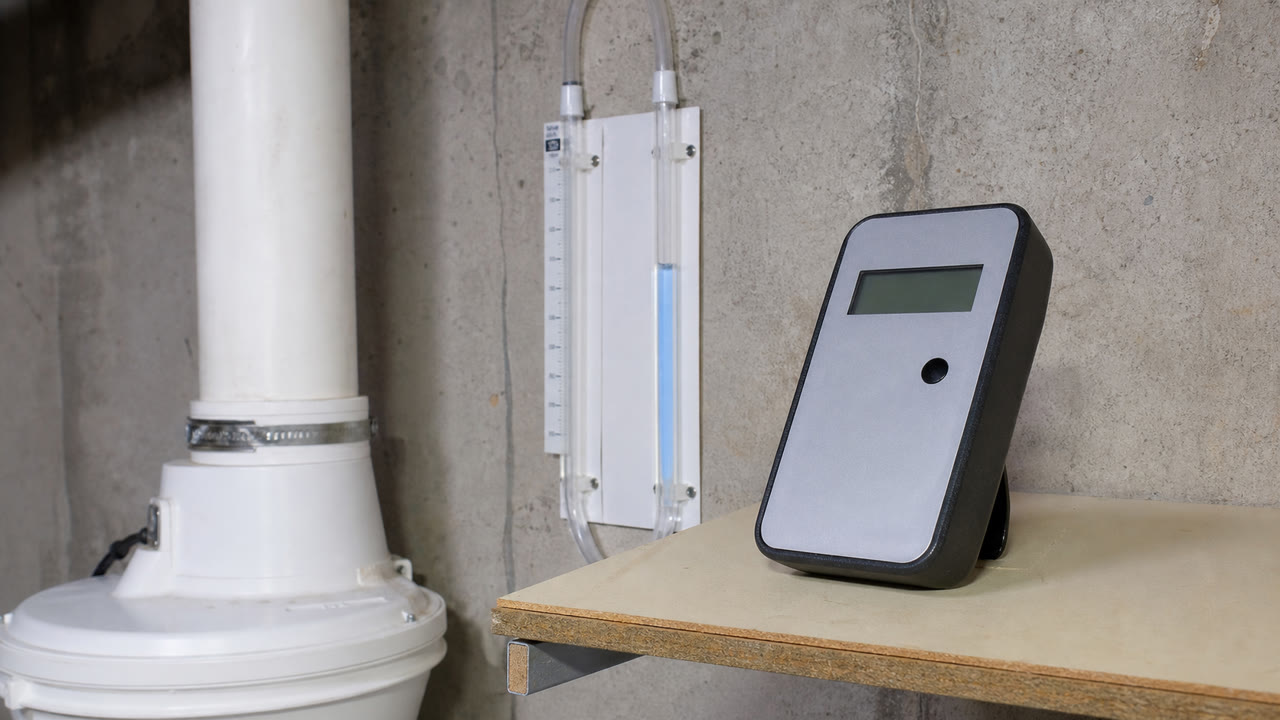
A short-term test places a measurement device — a continuous monitor or a charcoal-based kit — in the lowest lived-in level of the home for a minimum of 48 hours under closed-house conditions: windows shut, doors used normally. The result is your number in pCi/L. Continuous monitors also record the hour-by-hour pattern, which matters in real-estate situations because it shows whether conditions were stable during the test. Long-term tests, running 90 days or more, average out weather and seasonal swings and give the truest picture of year-round exposure; they’re the right tool when a short-term result lands near the line and nobody is on a deadline.
This is the most common reason anyone in Asheville tests. Buyers order radon tests during the due-diligence window, and an elevated result becomes part of the repair negotiation. If you’re selling, testing before listing means a surprise number can’t derail your timeline. Either way the clock matters, which is why we ask about your dates up front.
Every system we install gets a follow-up test — that’s the proof, not the manometer. But verification testing also applies to systems we didn’t install: if your house came with a radon system and no paperwork, a 48-hour test tells you whether it’s actually holding the level down or just humming.
Radon levels shift when houses change: a finished basement, new HVAC, air-sealing work, an addition, even a new sump arrangement. The standing guidance is to retest every couple of years and after any significant renovation. Winter tests in WNC often read higher than summer ones in the same house — the stack effect at work — so a borderline summer result is a reason to test again in heating season, not a reason to relax.
The minimum credible short-term test runs 48 hours under closed-house conditions. Results from a continuous monitor are available as soon as the test ends, which is why this format fits real-estate timelines so well.
A properly used charcoal kit is a legitimate screening tool, and if yours came back elevated, take the number seriously — it’s a fine reason to call. Where kits fall short is in real-estate transactions, where the parties generally want a monitored, tamper-aware test, and in borderline results, where a single data point may not tell the story. We’re happy to talk through a kit result and what to do next.
Either is defensible, which is exactly why it’s worth a phone call rather than a coin flip. A long-term test would tell you whether 3.6 is your real average or a low moment; mitigation would simply put the question to bed, typically landing the house well under 2.0. The right answer depends on the house, the season the test ran, and how the lower level is used — all things a short conversation covers.
Thirty seconds. We call back by phone — usually with a clear scope from that one call.
You don’t need to understand the report. The number is enough — for example, “inspection said 6.8” tells us almost everything we need to start.
Call with your situation and your dates. Testing is the one radon service where the calendar is part of the job, and we plan around yours.